
A comparison of various cooling systems and their operational characteristics
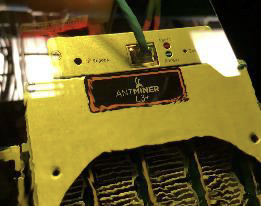
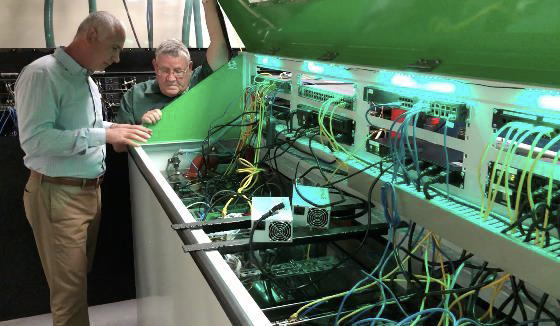
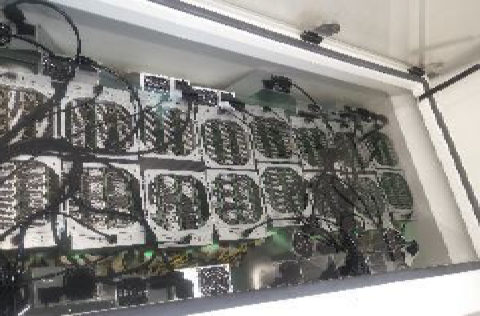
Single-phase Liquid Immersion Cooling for Datacenters
Electronics are fully immersed in dielectric liquid coolant. Cools the server through low pressure circulation of coolant around servers, dumping waste heat using fluid-to-fluid or fluid-to-air heat exchangers. Requires coolant infrastructure and can use an open or sealed containment system.
No fans are required! – Just a low pressure (2-5psi) flow of coolant through off the shelf air-cooled miners is more than enough to cool them without fans
No water needed! – Nearly every system can be cooled with direct heat exchange to air. There’s no water use, no water heat exchangers, no water cooling towers. Just a simple, quiet reliable “dry cooler” is enough to cool the system.
Very high miner density – up to 144 miners in a single SLIC Tank
Open bath cooling – No vapors, no smell, and no problems!
Biodegradable and clean!
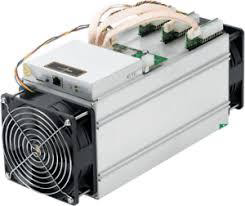
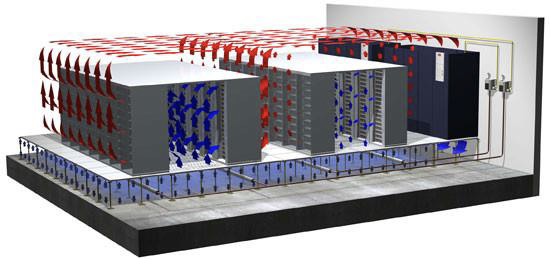
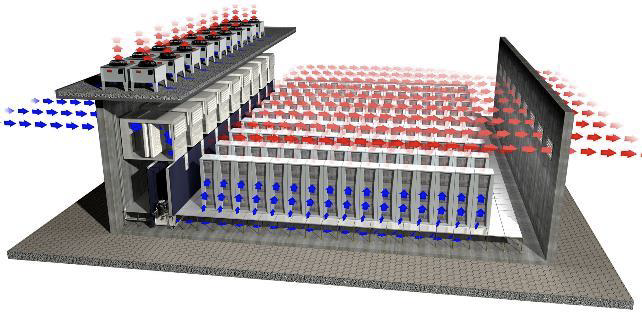
Typical Air-Cooled Infrastructure
Air-Cooling requires multiple systems and multiple redundancies all delivered at great cost of capital and maintenance.
These cooling fans can use up to 30% of the all the power consumed by miners.
A/C & Water chilling units, compressors, and associated fans use about 40% of power in the typical mine or Data Center.
Hot and cold aisles and cooling infrastructure take up more than 1/2 of available floorspace!

Cold Plates
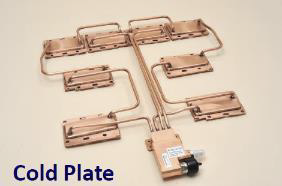
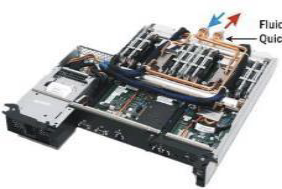
AKA – “Direct-to-Chip” / “Fluid-to-Chip” / “Water-to-Chip” / “Spot-Cooling”
Indirect cooling of devices using chip-specific, fluid-cooled heat exchangers mounted on each chip. Cools the chips through closed loop circulation of high-pressure water/glycol through cold plates, then transferring heat using glycol-to-water and then water-to-air heat exchangers. Requires water cooling infrastructure to the rack, internal server plumbing, CRAC units, and fans.
- Every board & chip layout requires a custom plumbing and cold plate design. Change your circuitry and you need a new cold plate.
Cold plates are micro-filters and fail due to fouling from bio-film and other contaminants.
Incoming water manifold pressures can exceed 200psi, requiring water plumbing rated at 1000psi per ASHRE.
Requires very expensive dripless connectors to prevent high pressure water failure and intrusion.

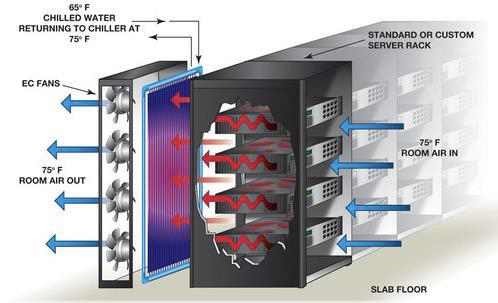
Back of Rack Water Cooled Radiators
Adds water filled air-cooling radiators to the back of the rack. Cools the miners through closed loop circulation of chilled water through radiators, dumping waste heat using fluid-to-fluid or fluid-to-air heat exchangers. Requires water cooling infrastructure to each rack and fans are required on both the servers and the back of rack radiator. This is in addition to the air-cooling infrastructure already in place.
Requires chilled water plumbed into each individual rack.
Servers still have all their fans operating.
Add even more fans at the back every rack.
Still need the same air-cooling infrastructure.
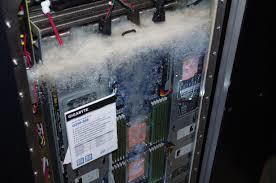
2-phase Immersion Cooling (2PIC)
Miners are fully immersed in low-temp-boiling fluoroketone solvent (PFAS fluids). The fluorinated solvent boils as it contacts hot electronics components. Heat is removed by condensing the vaporized solvent with vapor-to-water heat exchangers, transferring the heat to a water/glycol loop and then eventually to another water loop that goes to cooling towers. Requires water cooling infrastructure to the rack, vapor containment, and pressurized sealed system.
- Fluorinated ketones are classified as PFAS, and are being banned worldwide for health and environmental reasons.
Requires chilled water plumbed into each tank for the vapor to be cooled through a gas to fluid condenser.
Fluid is vaporized by the heat of the electronics. Even in a closed system, there will be coolant that evaporates into the environment.
The boiling action of the coolant creates micro-cavitation which actually erodes the heated metals in the device destroying it and contaminating the coolant with metallic particles making the coolant conductive.
